Stomach Vacuum Exercises vs Wearable Sauna Suits: Which One Actually Works for a Slimmer Waistline?
Key Takeaways: What You Need To Know Before Choosing Between Stomach Vacuums and Sauna Suits
- Stomach vacuum exercises strengthen the transversus abdominis — your deepest core muscle — which can visually tighten your waistline over time, but they do not burn belly fat on their own.
- Sauna suits cause rapid water weight loss through sweat, not actual fat loss, and come with real health risks including dehydration and overheating if used incorrectly.
- These two tools serve completely different purposes: one builds functional core strength, the other creates temporary cosmetic or weigh-in results.
- Most people perform the stomach vacuum exercise incorrectly by simply sucking in their stomach, which makes it completely ineffective — the correct technique is explained in detail below.
- Combining the right tools, diet strategies, and exercise programs is what drives real, lasting results — keep reading to find out what actually belongs in your routine.
One is a breathing exercise used by bodybuilders for decades. The other is a sweat-drenched suit that sounds almost too simple to work. But when it comes to stomach vacuum exercises versus sauna suits, the comparison runs much deeper than most people realize.
At Practical Weight Loss, the focus is always on cutting through the noise and giving fitness enthusiasts clear, honest information they can actually use. Whether you are chasing a tighter waistline, stronger core, or faster results, understanding exactly what each tool does — and does not do — will save you time, money, and frustration.

Two Very Different Tools, One Goal: A Slimmer Waistline
At first glance, stomach vacuums and sauna suits seem like they might be competing solutions to the same problem. Both get marketed toward people who want a flatter stomach or a more defined midsection. But the mechanisms behind each are fundamentally different, and mixing them up in your expectations is where most people go wrong.
A stomach vacuum is an intentional muscular contraction. A sauna suit is a heat-trapping garment. One changes the structure and control of your core muscles over time. The other changes the number on the scale temporarily by forcing your body to sweat out water. These are not the same result, and understanding that difference is everything when building an effective fitness strategy.

What Stomach Vacuum Exercises Actually Do
Despite its unusual name, the stomach vacuum exercise is not a gimmick. It has been used in physical therapy and competitive bodybuilding for decades under various names including stomach hollowing and the abdominal drawing-in maneuver, also known as ADIM. The movement specifically targets the transversus abdominis — the deepest layer of your abdominal wall — through a controlled inward contraction.
What makes this exercise genuinely useful is what it trains your body to do automatically. When you repeatedly practice drawing the lower abdominal muscles inward toward the spine, you build both strength and neuromuscular awareness in a muscle group that most conventional ab exercises barely touch. Crunches, sit-ups, and leg raises primarily target the rectus abdominis — the visible six-pack muscles — leaving the transversus largely undertrained in most people’s routines.
The Transversus Abdominis: Your Deepest Core Muscle
The transversus abdominis wraps around your torso like a natural corset. When it is strong and well-activated, it supports your spine, stabilizes your pelvis, and helps maintain intra-abdominal pressure during heavy lifts. According to research cited by the National Center for Biotechnology Information, this muscle plays a critical role in spinal stability and injury prevention, which is why physical therapists have used the abdominal drawing-in maneuver for rehabilitation long before it became a mainstream fitness trend.
Strengthening this muscle through consistent stomach vacuum practice can visually reduce the appearance of a protruding belly — not by burning fat, but by tightening the muscular structure beneath the surface. Think of it as pulling the internal scaffolding tighter around your midsection.
Why Most People Do It Wrong
Here is where most people fail immediately: they confuse “sucking in” with actually performing the stomach vacuum. Pulling your stomach in for a photo or holding your breath and puffing your chest out does nothing to contract the transversus abdominis. The muscle simply is not being engaged through that casual motion.
The correct technique requires a slow, deliberate inward pull of the lower abdominal muscles specifically. You should feel the contraction deep in your core — not just surface tension — and the movement should be completely independent of your breathing rhythm once you practice it enough. Many people spend weeks just learning to isolate this muscle before seeing consistent activation.
What It Can and Cannot Do for Your Waistline
A stronger transversus abdominis can create a measurably tighter waistline appearance and dramatically improve postural alignment, but it cannot spot-reduce fat. This is a critical distinction. If belly fat is covering your core, no amount of stomach vacuums will make it disappear — only a sustained calorie deficit combined with consistent exercise will achieve that. For those looking to accelerate that process, the 21-Day Smoothie Diet Weight Loss Program offers a structured nutritional approach that pairs effectively with core training to support real fat loss results.

How to Do the Stomach Vacuum Correctly
There are five common positions for performing the stomach vacuum, each with a different difficulty level. Beginners should start lying down where gravity assists the contraction, then progress toward seated and standing variations as neuromuscular control improves. The key across all versions is the same: exhale fully, then slowly draw the lower belly inward and hold for 15 to 60 seconds while continuing to breathe shallowly.
1. Lying Down (Easiest Starting Point)
Lie flat on your back with knees bent and feet flat on the floor. Exhale all the air from your lungs, then pull your lower abdominal muscles inward and upward toward your spine. Hold the contraction for 15 to 30 seconds without holding your breath. This is the most studied version of the exercise and the best starting point for building awareness of the transversus abdominis before moving to harder positions.
2. Prone Position (Face Down)
Lie face down with your forearms supporting your upper body. From this position, exhale and draw your belly button away from the floor. The prone position adds a gravity challenge that makes the contraction slightly more demanding, while still providing enough physical feedback to maintain proper form.
3. Seated (Most Challenging)
Sit upright in a chair or on the floor with a neutral spine. Exhale completely, then pull the lower abdomen inward without rounding your back or shifting your posture. The seated stomach vacuum is considered the most difficult variation because of the additional stabilization demands placed on surrounding muscle groups. Intermittent Fasting Program Success Stories and Fast Results highlights how pairing core strengthening habits with strategic eating windows has helped real people see measurable physical transformation over time.
The Real Benefits of Stomach Vacuums
When performed consistently and correctly, stomach vacuums deliver benefits that extend well beyond aesthetics. The core strength and body awareness you build through this exercise creates a functional foundation that improves nearly every other movement in your training routine — from deadlifts to overhead pressing to basic posture throughout the day.
Reduced Back Pain Risk
A weak or poorly activated transversus abdominis is directly linked to lower back instability. When this deep core muscle is not doing its job, other structures — including spinal erectors and hip flexors — compensate and become chronically overloaded. Regular stomach vacuum practice trains your body to automatically brace the deep core during movement, reducing the mechanical stress placed on the lumbar spine during both exercise and daily activity.
Stronger Lifting Mechanics
Elite powerlifters and Olympic weightlifters spend significant time developing their ability to create and maintain intra-abdominal pressure under heavy loads. The stomach vacuum exercise directly trains the muscle responsible for this pressure. When you can consciously engage your transversus abdominis on demand, your bracing during squats, deadlifts, and carries becomes more efficient and protective — translating to safer, stronger lifts across the board.

What Sauna Suits Actually Do
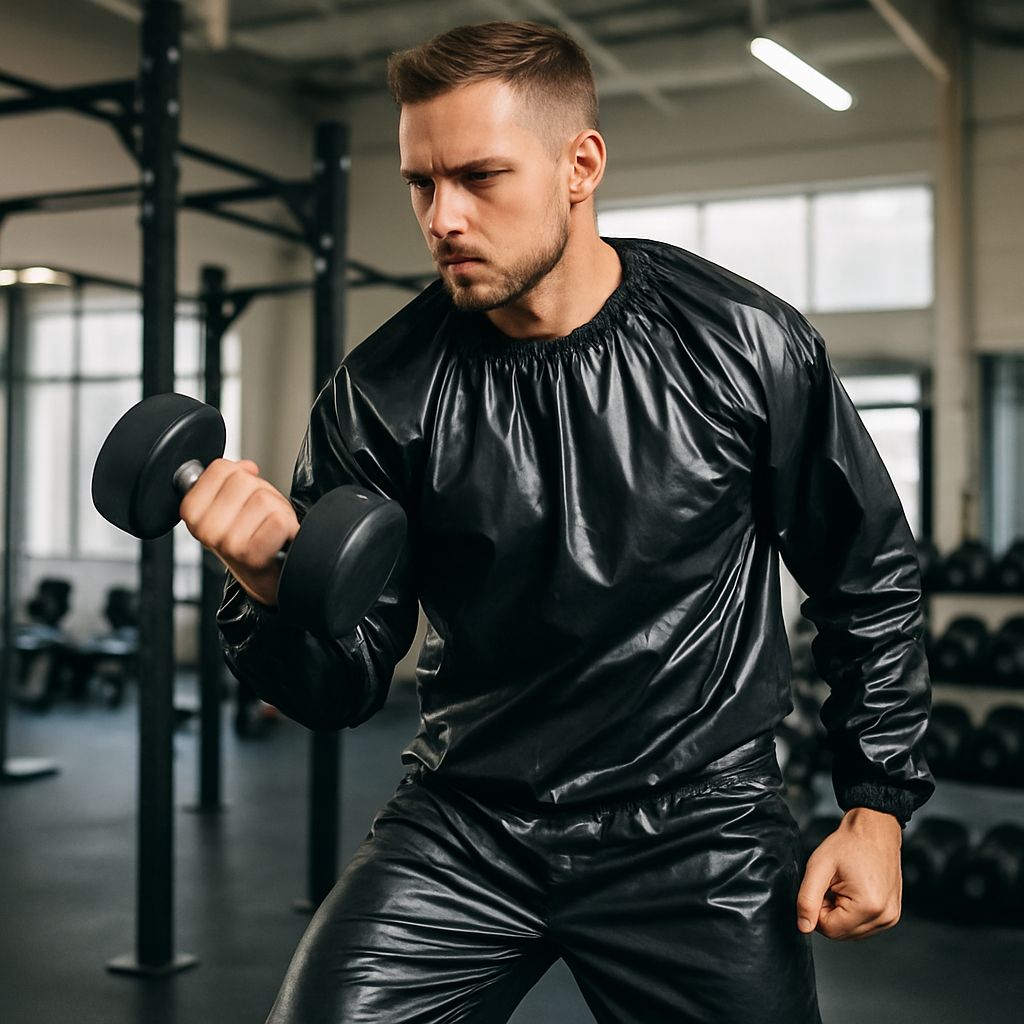
A sauna suit is a heat-trapping garment — typically made from nylon, PVC, or neoprene — designed to dramatically increase body temperature and sweat output during exercise. The basic principle is straightforward: trap body heat, force the body to sweat more aggressively, and produce rapid weight reduction on the scale.
The key word in that last sentence is “weight” — not fat. The weight you lose wearing a sauna suit is almost entirely water weight pulled from your body’s fluid stores through sweat. The moment you rehydrate, that weight returns. This is not a flaw in the product so much as a fundamental misunderstanding of what the product is actually designed to do.
Sauna suits were originally developed for use cases where rapid temporary weight reduction had a specific, time-sensitive purpose — not as a long-term body composition tool. Understanding that original context helps clarify both when they are useful and when they are completely the wrong choice. If you’re serious about long-term weight management and want an alternative approach that works at the hormonal level, a Telehealth GLP-1 Weight Loss Prescription may be worth exploring as a medically guided option.
- Sauna suits increase core body temperature significantly during exercise
- They elevate sweat rate well beyond what normal workout clothing produces
- The weight lost during a sauna suit session is primarily water, not fat tissue
- Most of that water weight returns within hours of normal rehydration
- They are commonly used by combat sport athletes for pre-competition weigh-ins
- Some studies suggest modest metabolic benefits from heat exposure during exercise, though evidence remains limited
Heat, Sweat, and Water Weight Loss Explained
Your body regulates internal temperature through sweating. When you trap heat against your skin with a sauna suit, your thermoregulatory system responds by producing sweat at an accelerated rate in an attempt to cool down. This process pulls fluid from your blood plasma, muscle tissue, and extracellular stores. The result is a measurable drop in body weight — sometimes one to three pounds in a single session — that looks dramatic but is physiologically temporary.
Important distinction: Fat loss requires a sustained calorie deficit over time. Water weight loss from a sauna suit can happen in a single workout session, but it has no direct impact on fat tissue, metabolic rate, or body composition in any meaningful long-term way. These are two completely separate physiological processes that should never be confused.
There is some emerging research suggesting that exercising in elevated heat environments may modestly increase caloric expenditure compared to exercising in normal temperatures. However, the difference is not dramatic enough to position sauna suits as a meaningful fat-loss tool on its own. The primary effect remains fluid loss, not fat oxidation.
For those wanting to support their body’s natural metabolic and weight regulation processes without relying on sweat-driven water loss, Natural GLP-1 Enhancement Without Needles, Prescriptions Or Side Effects represents a fundamentally different approach — one that works with your body’s hormonal systems rather than simply forcing fluid out through sweat.
Who Actually Uses Them and Why
The primary legitimate use case for sauna suits is in combat sports — boxing, wrestling, MMA, and judo — where athletes must make a specific weight class by a set deadline. In this context, the temporary water weight reduction has a clear, strategic purpose: pass the weigh-in. After the weigh-in, athletes rehydrate aggressively before competing, effectively gaining that weight back before they step into the ring or onto the mat.
Outside of competitive weight-cutting, some fitness enthusiasts use sauna suits during cardio sessions believing the extra sweat indicates extra fat being burned. This belief is physiologically inaccurate. Sweat volume is not a proxy for fat loss. A person can sweat heavily in a hot environment while sitting completely still — no meaningful calorie burn required. When evaluating weight loss tools, it is also worth knowing how to protect yourself from misleading products — understanding how to Spot Fake Diuretics Claims & Warnings: Identify & Avoid Scams can help you avoid wasting money on tools that promise water-weight results while claiming they are fat loss solutions.
The Risks You Need to Know
Sauna suits carry real physiological risks that are frequently downplayed in marketing materials. Severe dehydration, dangerous overheating, heat exhaustion, and in extreme cases heat stroke are all documented risks associated with sauna suit misuse. Athletes have died during aggressive weight-cutting protocols involving sauna suits combined with extreme fluid restriction. Even at lower risk thresholds, regular use without proper hydration management can impair athletic performance, kidney function, and cardiovascular efficiency.

Stomach Vacuum vs Sauna Suit: Direct Comparison
Putting both tools side by side reveals just how different their mechanisms and outcomes really are. One builds something — functional strength, motor control, spinal stability. The other removes something temporarily — water, not fat. Neither is universally good or bad, but using either without understanding exactly what it does will lead to disappointment or worse.
The fitness industry consistently oversells both of these tools. Stomach vacuums get marketed as waist-slimming miracle exercises when they are really targeted neuromuscular training tools. Sauna suits get marketed as fat-burning accelerators when they are really short-term fluid management devices. Strip away the marketing and the actual comparison becomes much clearer and more useful.
Core Strength and Muscle Activation
Stomach vacuums win this category without contest. The entire purpose of the exercise is to isolate and strengthen the transversus abdominis — a muscle that has measurable, lasting functional value. With consistent practice over weeks and months, you develop real neuromuscular control over your deepest core layer that improves posture, reduces injury risk, and enhances athletic performance across virtually every movement pattern.
A sauna suit contributes nothing to core strength or muscle activation. It is a passive garment. Wearing it does not change how your muscles fire, how your nervous system recruits motor units, or how your core stabilizes your spine. Any core benefit you experience in a sauna suit session comes entirely from the exercise you perform while wearing it — not from the suit itself.
Fat Loss and Body Composition
Neither tool is a direct fat loss solution on its own — but for different reasons. Stomach vacuums strengthen a muscle that cannot independently burn significant calories or reduce subcutaneous fat. Sauna suits produce water weight loss that reverses upon rehydration. True body composition change requires a calorie deficit, progressive exercise, and often strategic nutritional timing. The comparison between Tirzepatide and Semaglutide as medically supervised fat loss tools illustrates just how different clinically meaningful fat reduction looks compared to sweat-based or exercise-based approaches alone — and underscores why pairing the right strategies together matters far more than relying on any single tool.
Safety Profile
Stomach vacuums carry virtually no injury risk when performed correctly. Because the exercise involves no external load, no ballistic movement, and no joint compression, it is safe for nearly every fitness level including beginners, postpartum individuals, and those recovering from lower back injuries. The only real risk is performing it incorrectly and developing a false sense of progress — which wastes time but causes no physical harm.
Sauna suits are an entirely different story. The risk profile is genuinely significant and should be taken seriously. Overheating, severe dehydration, electrolyte imbalance, and cardiovascular strain are all real documented outcomes from sauna suit misuse. People with cardiovascular conditions, hypertension, or kidney issues should avoid them entirely. Even healthy individuals need strict hydration protocols and time limits when using them. This is not a tool to experiment with casually.
Long-Term vs Short-Term Results
Stomach vacuums produce slow, cumulative results that compound over weeks and months into meaningful structural changes in core strength and waist appearance. Sauna suits produce immediate, visible results on the scale that disappear within hours. If your goal is long-term body composition change and functional fitness, stomach vacuums offer something real and lasting. If your goal is making a weight class by tomorrow morning, a sauna suit serves that specific short-term purpose — nothing more.

Which One Belongs in Your Routine
For the vast majority of fitness enthusiasts, stomach vacuum exercises belong in the routine and sauna suits do not — at least not as a regular training tool. The stomach vacuum delivers real, lasting value: stronger deep core muscles, better spinal stability, improved lifting mechanics, and a progressively tighter midsection. These are outcomes that build on each other over time and enhance every other aspect of your training. You can do them lying in bed in the morning before you even get up, and over three to six months, the cumulative effect on your core function is genuinely significant. Paired with a metabolism-supporting supplement like Cardio Slim Tea, a consistent core training practice becomes part of a well-rounded daily health routine that addresses both fitness and metabolic wellness simultaneously.
Sauna suits belong in very specific, limited use cases — primarily competitive athletes with a defined, time-sensitive reason to cut water weight before a weigh-in. Outside of that context, the risks outweigh the benefits for most people. If you are wearing a sauna suit during regular cardio sessions hoping to burn more fat, you are misunderstanding what the tool does and potentially putting your health at risk in the process. Redirect that energy toward building a stronger nutritional foundation and a smarter training protocol instead.
Frequently Asked Questions
| Topic | Stomach Vacuum | Sauna Suit |
|---|---|---|
| Primary Function | Strengthens transversus abdominis | Forces water weight loss through sweat |
| Burns Fat Directly? | No | No |
| Results Timeline | Weeks to months of consistent practice | Immediate but temporary (hours) |
| Safety Risk Level | Very low | Moderate to high without proper protocols |
| Best Used For | Core strength, posture, waist tightening | Pre-competition weigh-in weight cutting |
| Equipment Needed | None | Sauna suit garment |
| Suitable for Beginners? | Yes | Not recommended without supervision |
Can stomach vacuum exercises give you a flat stomach?
Stomach vacuum exercises can visually tighten your midsection by strengthening the transversus abdominis — the deep muscle that acts like a natural internal corset around your waist. Over time, a well-trained transversus abdominis pulls the abdominal wall inward and creates a flatter appearance, particularly in the lower belly. However, if a layer of subcutaneous fat sits over your abdominal muscles, no amount of stomach vacuums will make it disappear. Fat loss requires a sustained calorie deficit. The stomach vacuum addresses the muscular structure underneath — not the fat on top.
How long does it take to see results from stomach vacuums?
Most people begin to notice improved muscle awareness and control within two to three weeks of daily practice. Visible changes in waist tightness and posture typically emerge after four to eight weeks of consistent, correct execution. The timeline depends heavily on starting fitness level, how frequently you practice, and whether you are performing the contraction correctly rather than simply sucking your stomach in.
Consistency matters more than intensity with this exercise. Performing two to three sets of 15- to 60-second holds daily will produce better results than occasional longer sessions. Progress is gradual but real — and unlike many fitness trends, the functional benefits you build through stomach vacuums do not disappear when you stop using a product or cancel a subscription.
Are sauna suits safe to wear during every workout?
No. Wearing a sauna suit during every workout significantly increases the cumulative risk of dehydration, heat stress, and electrolyte depletion over time. Even if each individual session feels manageable, repeatedly subjecting your cardiovascular system and kidneys to the demands of heavy sweat-driven fluid loss without adequate recovery creates a compounding physiological burden. Athletes who use sauna suits for weight cutting do so infrequently, under supervision, and with carefully managed rehydration protocols — not as part of their standard daily training regimen. For more insights, check out this review on sauna suits.
If you are considering regular heat-based training for performance or metabolic benefits, working with a qualified coach or sports medicine professional to structure safe protocols is strongly recommended. Casual, unsupervised daily sauna suit use is not a practice supported by exercise science for general fitness populations.
Can you use both stomach vacuums and a sauna suit together?
Technically yes, but there is little reason to combine them in most training contexts. Stomach vacuums are typically performed as a standalone exercise or incorporated into a warm-up and cool-down, not during high-intensity cardio sessions where a sauna suit would be worn. If you are a competitive athlete using a sauna suit for a legitimate weight-cutting protocol, adding stomach vacuum practice to your separate training sessions as a core-strengthening tool is perfectly reasonable — they simply operate in completely different domains and serve different purposes without meaningful interaction between them.
Do sauna suits burn actual fat or just water weight?
Sauna suits primarily produce water weight loss — not fat loss. The heat-trapping mechanism forces your body to sweat heavily, pulling fluid from your blood plasma, muscle tissue, and interstitial spaces. This shows up as a lower number on the scale but reverses almost entirely once you drink fluids and rehydrate normally.
Some research suggests that exercising in an elevated heat environment may modestly increase caloric expenditure compared to the same workout in normal temperature conditions. However, this effect is relatively small and does not meaningfully translate into accelerated fat loss over time. The difference in calories burned is not significant enough to position sauna suits as a practical fat-loss tool for general fitness populations.
True fat loss is driven by sustained energy deficit — consuming fewer calories than your body expends over time, supported by consistent exercise and smart nutritional choices. No garment, regardless of how much you sweat in it, changes the fundamental biochemistry of fat oxidation. Tools that work with your hormonal and metabolic systems to support genuine fat loss, such as medically guided options, will always outperform sweat-based approaches when real body composition change is the goal.