GLP-1 Treatment Insurance Coverage: Challenges and How to Overcome Them
Key Takeaways: What You Should Know About GLP-1 Insurance Coverage Before Your Next Doctor Visit
- Insurance coverage for GLP-1 medications varies dramatically depending on whether the drug is prescribed for Type 2 diabetes or weight loss — and understanding this distinction is the single most important factor in getting approved.
- Less than one in five large employers currently cover GLP-1 medications for weight loss purposes, but that number is shifting as pressure from employees and new clinical evidence mounts.
- If your claim is denied, you have real options — prior authorization appeals, formulary exception requests, and medical necessity documentation can all reverse a denial.
- Telehealth platforms and manufacturer savings programs can dramatically reduce your out-of-pocket costs even when insurance won’t budge.
- The GLP-1 coverage landscape is changing fast in 2025 and 2026 — some insurers are expanding access while others are pulling back entirely, and knowing which camp your insurer falls into changes your entire strategy.
GLP-1 Insurance Coverage Is a Moving Target — Here’s What You Need to Know
Getting a GLP-1 prescription is often the easy part — getting your insurance to pay for it is where things get complicated fast.
GLP-1 receptor agonists like semaglutide (Ozempic®, Wegovy®) and tirzepatide (Mounjaro®, Zepbound®) have become some of the most talked-about medications in modern medicine. They work, the clinical data is strong, and demand is enormous. But insurance coverage has struggled to keep pace with all of that momentum. Some plans cover these drugs fully for certain conditions. Others exclude them outright. And many fall somewhere in the middle, with coverage that depends on a maze of criteria that most patients don’t know exists until they’re staring at a denial letter.
For people managing Type 2 diabetes, the path to coverage is generally more straightforward. For those seeking GLP-1 therapy primarily for weight loss, the road is steeper — but far from impossible. The 21-Day Smoothie Diet Weight Loss Program is one example of a complementary resource many patients explore while navigating coverage gaps, particularly during the waiting period between initial prescription and insurance approval.
This guide is designed to give you a clear, honest picture of where GLP-1 insurance coverage stands right now, how to check your own plan, and exactly what to do when the answer you get isn’t the one you were hoping for.
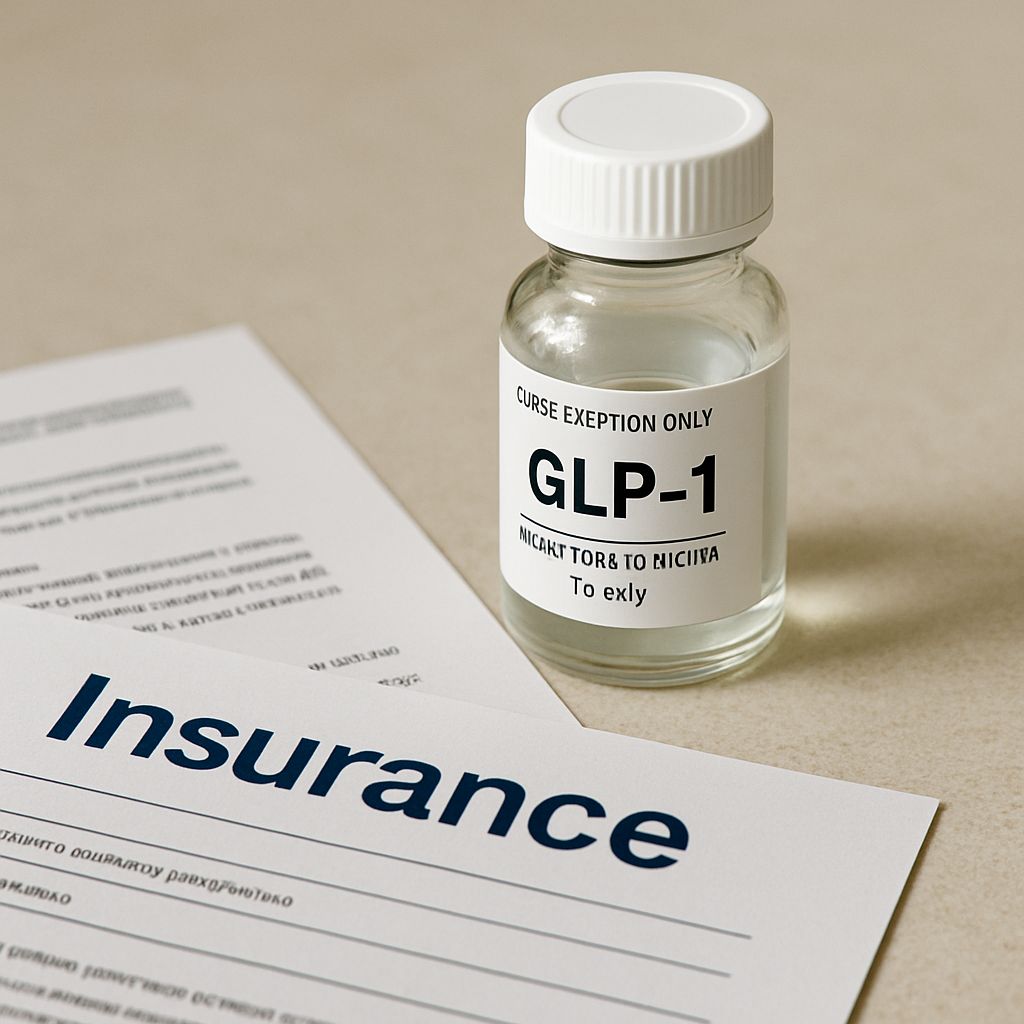
Why Insurers Treat GLP-1s Differently for Diabetes vs. Weight Loss
The core issue comes down to how insurance companies categorize medical necessity. Type 2 diabetes is classified as a serious chronic disease with well-documented, life-threatening complications. Obesity, despite being officially recognized as a disease by the American Medical Association since 2013, is still treated by many insurers as a lifestyle condition rather than a medical one — and that distinction has enormous financial consequences for patients.
The Cost Argument: Why Insurers Hesitate on Weight Loss Coverage
The math is uncomfortable but real. Brand-name GLP-1 medications like Wegovy® and Zepbound® can cost between $900 and $1,400 per month at list price. When insurers calculate the impact of covering these drugs for the millions of Americans classified as obese, the projected cost to plan premiums is significant enough to give even large carriers pause. Covering GLP-1s for weight loss doesn’t just affect the patients who use them — it can raise premiums across the entire plan membership, which creates a political problem for insurers trying to keep employer clients happy.
According to a KFF study of large companies, fewer than one in five offered coverage for GLP-1 medications specifically for weight loss. Among those that do offer coverage, one-third reported that it contributes significantly to their overall healthcare spend. That financial pressure is real, and it directly shapes the coverage decisions that land in your inbox.

What Medicare’s $35 Billion Projection Actually Means for Patients
Medicare’s projected cost to cover GLP-1s for obesity treatment has been cited as a key reason federal coverage expansion has moved slowly. For individual patients, this translates into a coverage gap that disproportionately affects older Americans who need these medications most. The good news is that Medicare does cover GLP-1s when prescribed for Type 2 diabetes or, more recently, for cardiovascular risk reduction following the FDA approval of semaglutide for that indication — a development that has quietly opened a new coverage pathway for many patients.
How FDA-Approved Indications Determine What Gets Covered
Every GLP-1 medication carries specific FDA-approved indications, and insurers use those approvals as the primary framework for coverage decisions. Ozempic® is FDA-approved for Type 2 diabetes management and cardiovascular risk reduction. Wegovy® is FDA-approved for chronic weight management. Mounjaro® is approved for Type 2 diabetes. Zepbound® is approved for obesity. The distinction matters because your insurer may cover the diabetes-approved version of a drug but exclude the weight-loss-approved version — even when the active ingredient is identical.
How to Check If Your GLP-1 Is Covered Right Now
Don’t assume your plan does or doesn’t cover GLP-1 medications — verify it directly. Insurance formularies change frequently, sometimes mid-year, and the only way to know your current status is to check through one of these specific channels.
1. Log Into Your Insurance Portal and Search the Formulary
Every major insurer provides an online drug formulary search tool through their member portal. Log in, navigate to the prescription drug section, and search for the specific brand name of your medication — not just the drug class. Search for “Ozempic,” “Wegovy,” “Mounjaro,” or “Zepbound” individually, since each may have a different tier, coverage status, or prior authorization requirement under your plan. Note the tier level and any restrictions listed, such as quantity limits or step therapy requirements.
2. Call Your Insurer Directly and Ask These Specific Questions
A formulary search gives you a starting point, but a direct phone call fills in the gaps. When you call the member services number on your insurance card, ask these questions specifically:
- Is [medication name] covered under my plan for [Type 2 diabetes / chronic weight management / cardiovascular risk reduction]?
- What are the prior authorization criteria for this medication?
- Are there step therapy requirements I need to complete first?
- Is GLP-1 therapy covered as a pharmacy benefit or a medical benefit under my plan?
- What is my cost-sharing responsibility if the medication is covered?
Write down the name of the representative you speak with, the date and time of the call, and the reference number for the conversation. This documentation becomes valuable if you need to appeal a denial later.
3. Contact Your HR Department If You Have Employer-Sponsored Insurance
If your coverage comes through an employer health plan, your HR or benefits team can often get faster, more specific answers than the insurer’s general member services line. Employer-sponsored plans sometimes have negotiated benefits that aren’t fully reflected in standard formulary searches, and your HR team may know about coverage criteria, exceptions, or upcoming formulary changes that affect your situation directly.
Coverage Check Method Best For Time Required Detail Level Online Formulary Search Quick initial check 5–10 minutes Basic tier and restriction info Member Services Phone Call Detailed coverage criteria 20–40 minutes High — get specifics on PA and step therapy HR / Benefits Department Employer-sponsored plans 1–2 business days High — may reveal negotiated exceptions Prescriber’s Office Verification Real-time electronic eligibility check Same day Very high — tied directly to your prescription
Using more than one of these methods is not overkill — it’s smart. Formularies can have errors, and phone representatives occasionally provide incorrect information. Cross-referencing two sources before making decisions about your treatment plan protects you from surprises at the pharmacy counter.
4. Ask Your Prescriber’s Office to Verify Coverage Electronically
Most prescribers’ offices use electronic health record systems that can run a real-time insurance eligibility and formulary check at the time of prescribing. This is one of the most reliable ways to verify coverage because it pulls directly from your insurer’s live data rather than a static webpage. Ask your doctor’s office or their medical assistant to run a coverage check before the prescription is sent, so any prior authorization requirements are identified and initiated immediately — rather than discovering the issue when you arrive at the pharmacy.

Coverage Requirements You Are Likely to Face
Even when your insurance plan technically covers a GLP-1 medication, that coverage rarely comes without conditions attached. Most insurers layer multiple requirements between your prescription and your filled bottle, and understanding those requirements before you hit them makes the entire process significantly less frustrating.
The most common barriers are prior authorization, step therapy, quantity limits, and BMI or diagnosis thresholds. Some plans require all of these simultaneously. Knowing which ones apply to your plan lets you and your prescriber prepare the right documentation upfront rather than scrambling reactively after a denial.
Prior Authorization: What It Is and Why It Gets Triggered
Prior authorization (PA) is a process where your insurer requires approval before they’ll cover a specific medication. It gets triggered for GLP-1 medications because of their high cost and the volume of patients seeking them. Essentially, your insurer wants confirmation that the medication is medically necessary for your specific situation before committing to cover it — and that determination is made by a reviewer at the insurance company, not your doctor.
When a PA is required, your prescriber submits clinical documentation to your insurer that typically includes your diagnosis, relevant lab results, your BMI, any comorbidities like hypertension or cardiovascular disease, and a record of previous treatments you’ve tried. The insurer then approves, denies, or requests additional information. This process can take anywhere from 24 hours to several weeks, depending on the insurer and how complete your initial submission is. A well-prepared PA request — one that directly addresses the insurer’s stated coverage criteria — is far more likely to be approved on the first attempt.
Step Therapy: When Insurers Force You to Try Other Treatments First
Step therapy, sometimes called “fail-first” coverage, requires patients to try and document failure with lower-cost treatments before the insurer will approve coverage for a GLP-1 medication. In practice, this can mean trying and failing on one or more other weight loss medications or diabetes treatments before your insurer considers the GLP-1 medically necessary. For patients with Type 2 diabetes, metformin is frequently the required first step. For weight management, older and less effective medications may need to be documented first. If your prescriber believes step therapy is clinically inappropriate for your situation, they can request an exemption — and that request carries more weight when it’s backed by documented clinical reasoning. For those exploring broader treatment strategies while navigating step therapy requirements, reading about Integrating a Low-Carb Diet with Trulicity® for Enhanced Results may offer useful context on combining lifestyle and medication approaches.
How to Fight Back If Coverage Is Denied
A denial is not a final answer. It is the beginning of a process that, with the right steps, has a realistic chance of being reversed. Insurance companies deny claims for many reasons — missing documentation, a coding error, a technicality in how the prescription was submitted — and many of those denials are overturned on appeal.
The key is to act quickly, document everything, and work closely with your prescriber. You have a legal right to appeal any coverage denial, and insurers are required to provide you with the specific reason for the denial in writing. That denial letter is your roadmap — it tells you exactly what the insurer says is missing, which tells you exactly what to address in your appeal. Cardio Slim Tea is one option some patients use to support their weight management efforts during the sometimes lengthy appeals process, keeping momentum while waiting for coverage decisions.
1. Request the Coverage Criteria Documents From Your Insurer
Before you build your appeal, request the full coverage criteria or medical necessity guidelines for the specific GLP-1 medication you were denied. Every insurer maintains these documents, and you are entitled to receive them. They outline exactly which clinical conditions, BMI thresholds, diagnoses, and prior treatment requirements must be met for the medication to be considered covered. Read these documents carefully — they give you the precise language your appeal needs to use.
Many patients skip this step and submit appeals that address the wrong criteria entirely. Getting the coverage criteria document first means your appeal can be written to match the insurer’s own stated requirements point by point, which is the most effective structure for a successful reversal.

2. Work With Your Prescriber to Build a Medical Necessity Case
Your prescriber is your most powerful ally in the appeals process. Ask them to write a detailed letter of medical necessity that goes beyond the standard prescription note. This letter should explain your specific clinical situation, why the GLP-1 medication is the appropriate treatment for you, why alternatives are insufficient or contraindicated, and how the medication directly addresses a documented medical condition. The more specific and clinically detailed this letter is, the stronger your appeal becomes. Generic letters are easy to dismiss. A letter that directly addresses the insurer’s own coverage criteria is much harder to deny.
3. Submit a Formulary Exception Request
If the medication you need isn’t on your plan’s formulary at all, a formulary exception request is the formal mechanism for asking your insurer to cover it anyway. This is different from a standard appeal — it’s a request to make an exception to the plan’s drug list based on medical necessity. Your prescriber must submit documentation showing that the covered alternatives on the formulary are clinically inadequate for your specific condition.
Formulary exception requests are particularly relevant for patients whose plans cover the diabetes-indicated version of a GLP-1 but exclude the weight-loss-indicated version. In some cases, your prescriber can document that the excluded medication is medically necessary in a way that the covered alternative cannot replicate — particularly if you have a documented intolerance or contraindication to the formulary alternative.
It’s worth noting that the landscape of GLP-1 options continues to expand, and understanding the differences between available medications can strengthen your case. Knowing how Tirzepatide and Semaglutide differ in their mechanisms and clinical profiles, for example, can help your prescriber make a more compelling argument for why a specific medication — and not its formulary alternative — is the right choice for your situation.
4. File a Formal Appeal — and Keep Going If Denied Once
Most insurance plans allow at least two levels of internal appeal before you reach the external review stage. If your first appeal is denied, do not stop. Request a second-level review and consider asking for a peer-to-peer review — a direct conversation between your prescriber and the insurer’s medical reviewer. This step alone reverses denials with surprising frequency because it replaces a paper-based review with a real clinical conversation.
If all internal appeals are exhausted and you’re still denied, you have the right to request an independent external review through your state’s insurance regulatory body or, for federally regulated plans, through the U.S. Department of Labor. External reviewers are not employed by your insurer and are required to make decisions based solely on clinical evidence and plan terms — which often produces different outcomes than internal reviews.
Throughout every stage of the appeals process, keep copies of everything: every letter, every submission confirmation, every phone call log with dates, times, and representative names. This paper trail protects you legally and practically, and it becomes essential if you ever need to escalate to your state insurance commissioner or pursue other remedies.

Cardiovascular Risk Can Strengthen Your Coverage Case
One of the most significant recent developments in GLP-1 coverage is the FDA’s approval of semaglutide (Wegovy®) for cardiovascular risk reduction in adults with obesity or overweight who also have established cardiovascular disease. This approval created a new coverage pathway that bypasses the weight-loss-only categorization that many insurers use to deny claims. If you have a documented history of heart disease, stroke, or related cardiovascular conditions, your prescriber can now make a case for GLP-1 coverage under the cardiovascular indication — which insurers are far more likely to approve than a weight management claim. This is a meaningful shift, and patients who qualify should make sure their prescriber is aware of and documenting this indication explicitly in any prior authorization or appeal submission. For women navigating this intersection of cardiovascular health, hormonal changes, and GLP-1 therapy, Understanding Ozempic®: How It Works for Women Over 40 offers a detailed look at how these factors interact.
How the GLP-1 Coverage Landscape Is Shifting in 2025 and 2026
The GLP-1 coverage environment is not static — it is changing rapidly, and in both directions at once. Some insurers are quietly expanding coverage criteria as clinical evidence mounts and employer demand increases. Others are pulling back entirely, citing unsustainable cost impacts on plan premiums. Patients who understood their coverage situation a year ago may find that the rules have changed, which makes staying current on your plan’s formulary an ongoing responsibility rather than a one-time task.
Why Blue Cross Blue Shield of Massachusetts Dropped Wegovy and Zepbound
In a high-profile move that sent ripples through the employer benefits industry, Blue Cross Blue Shield of Massachusetts announced it would remove Wegovy® and Zepbound® from coverage for weight management, citing the dramatic and ongoing cost burden these medications place on overall plan spending. This decision affected a significant number of insured patients mid-treatment and highlighted a vulnerability that exists for anyone whose GLP-1 coverage depends on an employer-sponsored plan — coverage can be removed, sometimes with relatively little notice, even for patients already established on therapy.
The BCBS Massachusetts decision is not an isolated case. It reflects a broader tension playing out across the insurance industry as plans attempt to balance the clinical value of GLP-1 medications against their cost at scale. For patients currently covered, this underscores the importance of understanding your plan’s renewal cycle, monitoring formulary updates annually, and having a contingency plan — whether that’s a manufacturer savings program, a telehealth-based alternative, or another cost-reduction strategy — ready if your coverage situation changes. A Telehealth GLP-1 Weight Loss Prescription is one option that has become increasingly popular among patients navigating coverage uncertainty, offering a more direct pathway to medication access that sidesteps some of the traditional insurance barriers entirely.

What Large Employer Coverage Trends Reveal About Where This Is Heading
Large employer health plans are the bellwether for where GLP-1 coverage is heading nationally. When major self-insured employers — the Fortune 500 companies, large hospital systems, and university health plans — make coverage decisions, they set expectations that ripple through the entire insurance market. Right now, those employers are deeply divided. Some are leaning into GLP-1 coverage as a workforce health investment and a competitive recruiting tool. Others are capping coverage, adding stricter eligibility criteria, or removing it altogether after seeing the impact on their annual benefits spend.
Employer Size GLP-1 Weight Loss Coverage Rate Primary Reason for Non-Coverage Trend Direction (2025) 500+ employees ~20% Premium cost impact on all members Mixed — expanding and contracting simultaneously 100–499 employees ~10–12% Budget constraints and limited negotiating power Slowly expanding where affordable Under 100 employees Less than 5% Fully insured plans with little flexibility Largely static
The employers most likely to cover GLP-1 medications for weight loss are those operating in competitive talent markets where benefits differentiation matters — technology companies, financial services firms, and large healthcare organizations. For patients employed by these organizations, GLP-1 coverage is increasingly becoming part of the standard benefits package, though eligibility criteria such as BMI thresholds and mandatory lifestyle program enrollment often apply.
The employers most likely to pull back or never offer coverage are smaller companies and those in industries with thin margins and high-turnover workforces. For patients in those situations, understanding the alternative pathways to access — telehealth platforms, manufacturer programs, and clinical alternatives — becomes the more practical focus. According to research referenced by sources tracking this issue, GoodRx for Weight Loss and similar platforms have stepped in to serve patients whose employer plans leave them without viable coverage options.
Ways to Cut GLP-1 Costs Even Without Insurance Coverage
No insurance coverage does not mean no access. The pathway to GLP-1 medications without insurance is harder and more expensive than with coverage, but there are legitimate, practical options that many patients don’t know about until they’re already frustrated by denial letters. The key is knowing which tools exist and applying them strategically based on your income level, prescribing situation, and how long you expect to need the medication.
Cost-reduction strategies generally fall into three categories: manufacturer savings programs, third-party discount platforms, and alternative prescribing channels such as telehealth. Most patients who successfully access GLP-1 medications without insurance are using at least two of these strategies simultaneously — not just one. Understanding Natural GLP-1 Enhancement Without Needles, Prescriptions Or Side Effects is also worth exploring for patients seeking approaches that work alongside or independently of the traditional pharmaceutical pathway, particularly while navigating insurance hurdles.
Manufacturer Savings Programs and Patient Assistance Options
Both Novo Nordisk (maker of Ozempic® and Wegovy®) and Eli Lilly (maker of Mounjaro® and Zepbound®) offer savings programs that can significantly reduce out-of-pocket costs for commercially insured patients and, in some cases, for uninsured patients who meet income criteria.
Novo Nordisk’s savings card for Wegovy® has allowed eligible commercially insured patients to pay as little as $0 per month for a limited time, though these offers change frequently and are subject to eligibility restrictions. Their patient assistance program, called the Novo Nordisk Patient Assistance Program, provides free medication to uninsured or underinsured patients who meet income requirements — typically those earning at or below 400% of the federal poverty level.
Eli Lilly offers a similar savings card for Zepbound® that has brought monthly costs down dramatically for eligible patients. Their Lilly Cares Foundation also operates a patient assistance program for uninsured patients who qualify based on income. These programs require an application and documentation of financial need, but for patients who qualify, they represent the most significant cost reduction available outside of insurance coverage.
The most important thing to understand about manufacturer programs is that they are designed for commercially insured patients or truly uninsured patients — they generally cannot be combined with Medicare or Medicaid, and using them when you have government insurance may violate program terms. Always read the eligibility criteria carefully before applying.
- Novo Nordisk Patient Assistance Program — free Wegovy® or Ozempic® for qualifying uninsured patients based on income
- Eli Lilly’s Lilly Cares Foundation — free Zepbound® or Mounjaro® for uninsured patients meeting income thresholds
- Wegovy® Savings Card — reduces cost-sharing for eligible commercially insured patients
- Zepbound® Savings Card — lowers monthly costs for commercially insured patients who qualify
- NovoCare® Patient Support — provides navigational help through Novo Nordisk’s coverage and financial assistance options

GoodRx Discounts and Subscription-Based Access Programs
GoodRx offers discounts on GLP-1 medications at participating pharmacies that can bring the cost down from the $900–$1,400 list price range to something more manageable, though it’s important to be realistic — even with GoodRx, injectable semaglutide and tirzepatide remain expensive without insurance. GoodRx discounts are most impactful on older, more established GLP-1 medications where generic competition or market dynamics have already pushed prices lower.
GoodRx for Weight Loss is a subscription-based service that bundles telehealth prescribing with GoodRx pricing tools, giving patients access to both a prescriber and reduced medication costs through a single platform. This type of bundled access model has grown significantly in 2024 and 2025 as demand for GLP-1 medications has outpaced traditional prescribing channels.
Telehealth platforms more broadly have become one of the most accessible entry points for GLP-1 prescriptions for patients whose primary care providers are unfamiliar with the medications or whose insurance situations make the traditional route impractical. Many of these platforms offer transparent pricing, streamlined prior authorization support, and direct pharmacy relationships that can reduce both cost and friction in the prescribing process.
- GoodRx — free coupon tool that reduces pharmacy costs at participating locations nationwide
- GoodRx for Weight Loss — subscription service combining telehealth prescribing and GoodRx pricing discounts
- Ro, Hims & Hers, Found, and similar telehealth platforms — bundle prescribing with medication access and often offer compounded semaglutide at lower price points
- Cost Plus Drugs (Mark Cuban’s pharmacy) — offers some GLP-1 class medications at dramatically reduced prices where available
Persistence Is the Most Underrated Tool You Have
Every step in this process — checking your formulary, submitting a prior authorization, filing an appeal, requesting a peer-to-peer review — requires patience and follow-through that most patients underestimate going in. The insurance system is not designed to make this easy, but it is designed to respond to persistence. Studies and patient advocacy data consistently show that a meaningful percentage of initial GLP-1 coverage denials are reversed at the first or second appeal, particularly when the appeal is supported by strong clinical documentation from a prescriber who understands the criteria being applied. The patients who give up after the first denial are the ones who don’t get access. The patients who treat the denial as a starting point — not an ending point — are the ones who change their outcomes.
If navigating this alone feels overwhelming, you don’t have to do it that way. Patient advocacy organizations, your prescriber’s prior authorization team, and benefits counselors at your insurer or HR department all exist to help move this process forward. Use every resource available to you, document every interaction, and keep going. The clinical case for GLP-1 therapy is strong — and a well-built appeal can make that case on your behalf in language that insurance reviewers are trained to respond to.
Frequently Asked Questions
The questions below reflect the most common points of confusion patients face when navigating GLP-1 insurance coverage for the first time. The answers are direct, specific, and actionable — because the goal here is to leave you with clarity, not more uncertainty.
If your specific situation isn’t addressed here, the best next step is always a direct conversation with your insurer’s member services department and your prescribing provider together — because the combination of clinical expertise and insurance knowledge is what produces the best outcomes in this process.
Does Insurance Cover GLP-1 Medications for Weight Loss?
Insurance coverage for GLP-1 medications for weight loss varies significantly by plan. Most commercial insurance plans cover GLP-1 drugs when prescribed for Type 2 diabetes. Coverage for weight management alone is far less common — fewer than one in five large employers offer it — and when it does exist, it typically comes with prior authorization requirements, BMI thresholds, and documented comorbidities such as hypertension, sleep apnea, or cardiovascular disease.
The fastest way to find out if your specific plan covers GLP-1s for weight loss is to call the member services number on your insurance card and ask directly about coverage criteria for the medication your provider is recommending. Always ask about the specific brand name, not just the drug class, since coverage can differ between products with the same active ingredient.
What Conditions Make It Easier to Get a GLP-1 Covered by Insurance?
Type 2 diabetes is the single condition most likely to result in GLP-1 coverage approval. Beyond that, having documented cardiovascular disease significantly improves your chances, particularly following the FDA’s approval of Wegovy® for cardiovascular risk reduction. Other conditions that can support a medical necessity case include obesity-related hypertension, obstructive sleep apnea, nonalcoholic fatty liver disease, and high cardiovascular risk scores. The more documented comorbidities you have, the stronger your clinical case — and the more leverage your prescriber has in prior authorization and appeal submissions.
What Should I Do If My GLP-1 Claim Is Denied?
Start by requesting your denial letter and the insurer’s coverage criteria document for the medication. Read both carefully to understand exactly why coverage was refused and what criteria the insurer says weren’t met. Then work with your prescriber to build a targeted appeal that addresses those specific criteria with clinical documentation. Submit a formal internal appeal, request a peer-to-peer review if the first appeal is denied, and escalate to an independent external review if all internal options are exhausted. Most importantly — don’t stop at the first denial. A significant percentage of GLP-1 coverage denials are overturned through the appeals process.
Does Medicare Cover GLP-1 Medications for Obesity?
Medicare Part D covers GLP-1 medications when prescribed for Type 2 diabetes and, following recent FDA approvals, for cardiovascular risk reduction in qualifying patients. However, Medicare has historically been prohibited from covering weight loss medications under Part D, which means coverage for obesity treatment alone remains limited. The Inflation Reduction Act and ongoing legislative efforts have begun to address this gap, but as of 2025, Medicare coverage for GLP-1s is most reliably available when a diabetes or cardiovascular diagnosis is documented and driving the prescription.
Can I Get GLP-1 Medications Without Insurance Coverage?
Yes — and more patients are accessing GLP-1 medications outside of traditional insurance pathways than ever before. Manufacturer savings programs from Novo Nordisk and Eli Lilly can significantly reduce costs for qualifying patients. GoodRx and similar platforms offer pharmacy discounts that lower the cash price at participating locations. Telehealth platforms have created bundled prescribing and dispensing models that provide access at predictable monthly costs, often including compounded versions of semaglutide or tirzepatide at substantially lower price points than brand-name options.
Compounded GLP-1 medications are worth understanding carefully. During periods when branded GLP-1 drugs are on the FDA shortage list, compounding pharmacies are legally permitted to produce versions of these medications at lower cost. However, compounded products are not FDA-approved, quality standards vary between compounding pharmacies, and the FDA has taken action against some compounders for safety concerns. If you pursue compounded GLP-1 therapy, verify that the compounding pharmacy holds current PCAB accreditation and operates under USP standards.
Ultimately, the right path without insurance depends on your income, your clinical situation, and how long you anticipate needing treatment. Combining a manufacturer savings card with a telehealth prescribing platform, for example, can bring monthly costs to a level that many patients can manage — even without a single dollar of insurance coverage. Practical Weight Loss provides ongoing resources and tools to help patients navigate both the clinical and financial sides of GLP-1 treatment access.