Real Intermittent Fasting Success Stories: Inspiring Results and Practical Tips
Key Takeaways: What You Need to Know About Intermittent Fasting Success
- Intermittent fasting focuses on when you eat, not just what you eat — and real people are losing 10 to 80+ pounds using this approach.
- The 16:8 method is the most beginner-friendly fasting schedule, but other methods like OMAD can accelerate results for those ready to commit.
- Beyond weight loss, IF practitioners report reversals in pre-diabetes symptoms, improved mental clarity, and reduced bloating.
- Most people start seeing noticeable changes within the first 2 to 4 weeks — but the adjustment period is real, and knowing how to push through it is the key to long-term success.
- Combining intermittent fasting with the right nutrition and lifestyle habits dramatically amplifies your results — keep reading to find out exactly how.
Intermittent fasting has quietly become one of the most effective and sustainable approaches to weight loss and overall health — and the real-world results speak for themselves.
Unlike traditional diets that obsess over calorie counting or eliminate entire food groups, intermittent fasting shifts the focus to when you eat. Johns Hopkins neuroscientist Mark Mattson, who has studied intermittent fasting for 25 years, explains that the method works by prolonging the period when your body has burned through the calories from your last meal and begins burning stored fat instead. This simple shift in eating timing creates a powerful metabolic effect that thousands of people are using to transform their health. For those exploring practical, sustainable weight loss strategies, Practical Weight Loss offers a wide range of resources, tools, and programs to help you find the right approach for your lifestyle.

Real People, Real Results With Intermittent Fasting
The science behind intermittent fasting is compelling, but what really drives people to try it — and stick with it — are the stories of people just like them who decided to make a change and actually got results. Hundreds of verified success stories from IF practitioners show consistent patterns: steady fat loss, improved energy, and a sense of freedom from the exhausting cycle of dieting.
What makes these stories powerful is not just the numbers on the scale. People describe feeling mentally sharper, sleeping better, and finally feeling in control of their relationship with food. These are lifestyle transformations, not just weight loss wins.
What Makes Intermittent Fasting Different From Other Diets
Most diets fail because they are restrictive, expensive, or simply unsustainable. Intermittent fasting is different because it does not require you to eliminate foods you love or purchase special meal plans. One of the things experts highlight most about IF is that it allows for a wide range of foods to be eaten and enjoyed. Sharing nutritious meals with others and savoring the eating experience remains fully intact — you are simply adjusting the timing. That flexibility is what makes it stick for so many people long-term.
How Fast Can You Expect Results
Most beginners notice changes within the first two to four weeks, though the timeline varies depending on your starting point, the fasting method you choose, and what you eat during your eating window. Some people drop 10 pounds in their first 21 days. Others experience a slower, steadier loss of one to two pounds per week that compounds into dramatic transformations over several months.
One important thing to understand is that the first week or two can feel rough. You may feel hungry, irritable, or low on energy as your body adjusts. However, research subjects who push through this adjustment period tend to stick with the plan long-term because the way they feel on the other side makes it worthwhile.

Quick IF Timeline Reference:
Timeframe What Typically Happens Week 1 Hunger and adjustment; body begins shifting to fat burning Week 2–3 Energy stabilizes; noticeable bloating reduction Week 4 Measurable weight loss; improved mental clarity reported Month 2–3 Consistent fat loss; metabolic markers begin improving 6–14 Months Significant body composition changes; 20–80+ lbs lost in verified stories
Weight Loss Wins: Success Stories From Real IF Practitioners
These are not fictional case studies or exaggerated before-and-afters. These are verified accounts from real people who committed to intermittent fasting and documented their journeys. Each one faced a different starting point and used slightly different methods — but the common thread is consistency and a willingness to push through the early discomfort.
What is striking about these stories is how often people describe stumbling into intermittent fasting almost by accident — through prayer, desperation, or a simple online search — and then discovering a tool that changed everything. The 21-Day Smoothie Diet Weight Loss Program is one complementary option that pairs well with IF eating windows, giving your body nutrient-dense fuel during the hours you do eat.
Here is a look at some of the most inspiring real-world intermittent fasting transformations:
- 42 pounds lost in 14 months using a consistent daily fasting window
- 10 pounds dropped in 21 days during an initial fasting experiment
- 80 pounds shed by combining keto eating with intermittent fasting
- Pre-diabetes symptoms reversed through consistent 16:8 fasting
- Decades of failed dieting ended by a woman who finally found freedom with IF

10 lbs in 21 Days: Jen’s Journey With IF
Jen did not set out to try intermittent fasting. She had been praying for a solution to her weight struggles and came across information about fasting almost by chance. She started with a simple rule — fast for 12 to 14 hours and then have her first meal. Within 21 days, she dropped from 192 to 182 pounds. That 10-pound result in three weeks was enough to make her dig deeper into the science of fasting, and what she discovered transformed her long-term approach to health entirely.
42 Pounds Gone in 14 Months: One Man’s IF Transformation
This story stands out because of its consistency. Rather than chasing extreme protocols or rapid results, this individual committed to a steady daily fasting routine and lost 42 pounds over 14 months. The slow and deliberate pace actually worked in his favor — the weight stayed off because the habits became permanent, not temporary.
Losing 80 Pounds: The Keto and IF Combination
For some people, combining intermittent fasting with a ketogenic eating style accelerates results significantly. One verified account documents an 80-pound weight loss achieved by pairing these two approaches. By restricting the eating window and focusing on low-carb, high-fat foods during that window, the body stays in fat-burning mode for extended periods throughout the day.
A Lifetime Dieter Finds Freedom With 16:8 Fasting
Perhaps the most emotionally resonant type of IF success story is the person who has tried everything — every diet, every program, every pill — and finally finds something that works. For many lifetime dieters, the 16:8 fasting method is that solution. The freedom of not having to follow a rigid meal plan, count every calorie, or avoid entire food categories gives people a sustainable structure they can actually live with.
The Most Popular Intermittent Fasting Methods That Deliver Results
Not all intermittent fasting schedules are created equal, and the best method is the one you can realistically maintain. The three most commonly used approaches each have distinct advantages depending on your lifestyle, goals, and how aggressively you want to pursue results.
16:8 Fasting: The Most Beginner-Friendly Approach
The 16:8 method means fasting for 16 hours and eating within an 8-hour window — for example, eating between noon and 8 PM and fasting the rest of the time. Since roughly half of the fasting window happens while you sleep, this is the most accessible starting point for most people. It requires no special foods, no calorie counting, and fits naturally into a normal daily schedule. This is the method behind the majority of beginner success stories and is widely recommended as the starting point for anyone new to IF.
OMAD (One Meal a Day): For Those Who Want Faster Results
OMAD compresses your entire daily nutrition into a single meal, creating a fasting window of approximately 23 hours. This is an advanced approach that delivers faster fat loss results but requires more discipline and planning to ensure you are hitting your nutritional needs in one sitting. It is not recommended for beginners, but for those who have already adapted to 16:8 and want to push further, OMAD can dramatically accelerate body composition changes.
It is worth noting that some people find Cardio Slim Tea helpful during extended fasting windows, as it supports metabolism and helps manage hunger during hours when eating is not permitted.
How to Choose the Right Method for Your Lifestyle
The right fasting method depends entirely on your schedule, your hunger patterns, and your health goals. If you are new to fasting, start with 12 to 14 hours and build from there. If your goal is aggressive fat loss and you are already metabolically adapted, OMAD or a 5:2 protocol — eating normally five days a week and restricting calories on two non-consecutive days — might be worth exploring with your doctor’s guidance.
Health Benefits Beyond Weight Loss
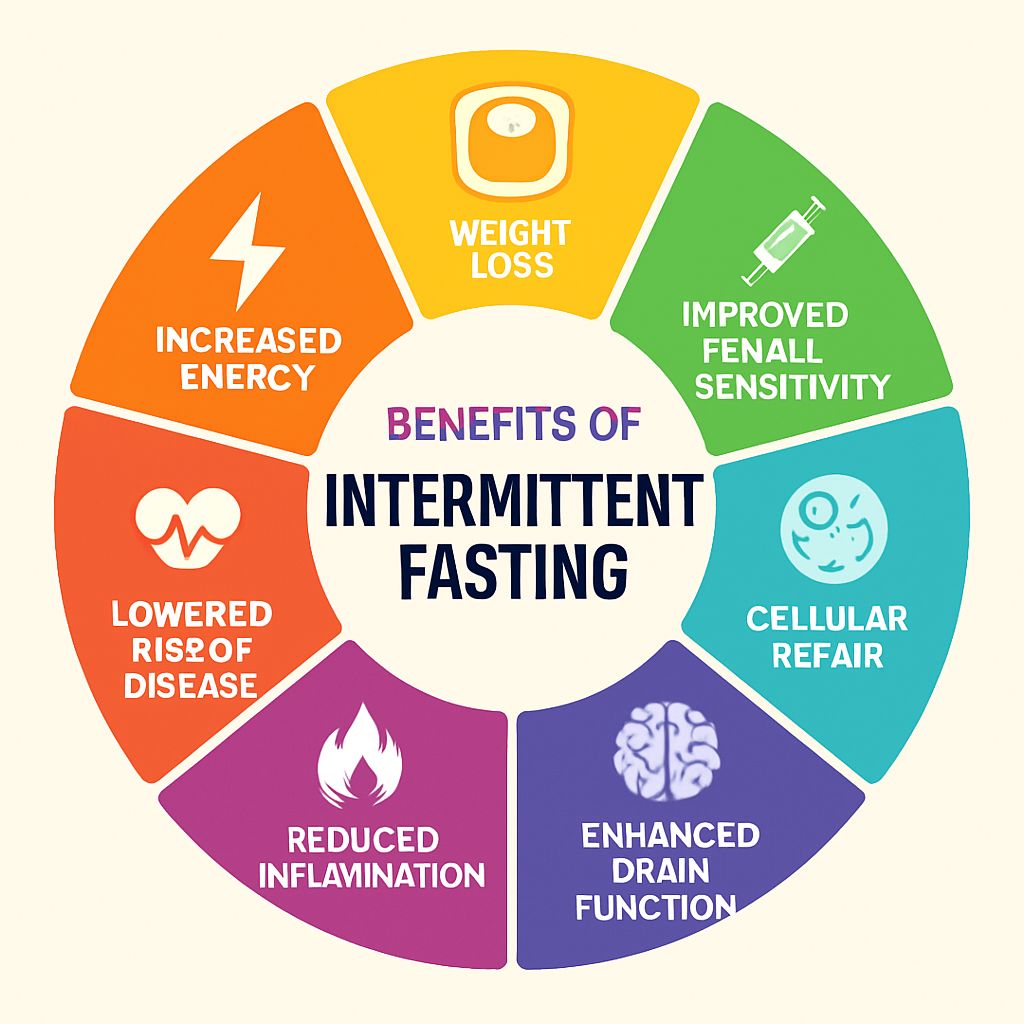
Weight loss is the headline benefit that draws most people to intermittent fasting, but it is far from the only reason to consider it. Johns Hopkins neuroscientist Mark Mattson notes that many things happen during intermittent fasting that protect organs against chronic diseases like type 2 diabetes, heart disease, age-related neurodegenerative disorders, inflammatory bowel disease, and many cancers. The metabolic shifts triggered by fasting create a cascade of healing effects throughout the body that go well beyond dropping dress sizes.

Reversal of Pre-Diabetes Symptoms
- Intermittent fasting has been shown to lower fasting glucose levels in people with or at risk of type 2 diabetes
- Fasting insulin levels drop significantly with consistent IF practice
- Leptin resistance — a key driver of obesity and blood sugar dysregulation — decreases with regular fasting
- Adiponectin levels increase, improving insulin sensitivity and reducing inflammation
- Several studies show IF reduces overall insulin resistance, which is the root cause of type 2 diabetes progression
For people managing pre-diabetes or trying to avoid a type 2 diabetes diagnosis, these metabolic improvements can be genuinely life-changing. Research consistently shows that intermittent fasting helps people lower their fasting glucose, reduce fasting insulin, and improve overall insulin sensitivity — all critical markers for blood sugar control. In some cases, people have been able to work with their doctors to reduce or eliminate medication as a direct result of these improvements.
The mechanism behind this is straightforward. When you extend the period between meals, your body depletes its glycogen stores and shifts to burning fat for fuel. This process naturally reduces circulating blood sugar and forces your cells to become more responsive to insulin over time. The longer and more consistently you fast, the more pronounced these effects tend to become.
It is worth exploring medical support options alongside IF if blood sugar management is your primary goal. A Telehealth GLP-1 Weight Loss Prescription can complement an intermittent fasting protocol for those who need additional clinical support for metabolic conditions, offering a medically supervised pathway that works alongside lifestyle changes rather than replacing them.
Reduced Bloating and Improved Digestion
One of the most immediately noticeable benefits people report within the first week or two of intermittent fasting is a significant reduction in bloating. When you give your digestive system an extended break each day, it has the time it needs to fully process food, clear out residual waste, and reset. Many people who have struggled with chronic bloating, discomfort after meals, or irregular digestion find that IF provides relief without any dietary changes whatsoever.
The extended fasting window also activates a process called the migrating motor complex — essentially a housekeeping wave that moves through your intestines during periods of not eating. This process is interrupted every time you snack or graze throughout the day, which is a pattern that drives a significant amount of digestive dysfunction. Intermittent fasting naturally restores this cycle, and the digestive improvements that follow can be dramatic.
Better Energy Levels and Mental Clarity
Ask anyone who has been doing intermittent fasting for more than a month about their energy levels and you will hear a consistent answer — they feel sharper, more focused, and more consistently energized throughout the day. This is not a placebo effect. When your body shifts from running primarily on glucose to efficiently burning fat for fuel, you eliminate the energy crashes that come with blood sugar spikes and dips. Fat is a far more stable energy source, and the brain responds noticeably to that stability.
Mattson’s research at Johns Hopkins also points to the neuroprotective benefits of fasting, noting that IF may help protect against age-related neurodegenerative conditions. Many practitioners describe the mental clarity they experience during fasting hours as one of their primary motivations for sticking with the practice — it becomes less about weight loss and more about how good they feel day to day. This shift in motivation is actually one of the strongest predictors of long-term IF success.
Impact on Non-Alcoholic Fatty Liver Disease
Non-alcoholic fatty liver disease is increasingly common and closely linked to metabolic dysfunction, insulin resistance, and excess body fat — all of which intermittent fasting directly addresses. By reducing circulating insulin levels and encouraging the body to burn stored fat (including fat around and within the liver), IF creates conditions that support liver health and may help reverse early-stage fatty liver accumulation. While this area of research is still developing, the connection between the metabolic improvements driven by IF and improved liver health outcomes is a promising and well-supported direction in current clinical literature.

Common Mistakes That Slow Down IF Results
Intermittent fasting is remarkably simple in concept, but that simplicity can be deceptive. There are a handful of mistakes that consistently derail people’s results, and most of them come down to underestimating how much what you do during your eating window matters. Getting the timing right is only half the equation.
The other half is what you put in your body when the eating window opens. A lot of people assume that because they are fasting, they have earned the right to eat whatever they want — and that thinking will stall your progress faster than almost anything else. For more information on how intermittent fasting works, you can refer to Johns Hopkins Medicine. Let’s look at the two most common pitfalls in detail.
Breaking the Fast Too Early
The most common mistake beginners make is cutting their fasting window short when hunger gets uncomfortable. The discomfort of hunger during fasting hours is temporary and almost always passes within 20 to 30 minutes if you distract yourself and stay hydrated. Breaking the fast early not only shortens the metabolic benefits of the fasting period but also reinforces the habit of eating in response to discomfort rather than genuine hunger — which is the exact pattern most people are trying to break. Push through it. The hunger signal will pass, and your body will adapt faster than you think.
Eating the Wrong Foods During Your Window
Intermittent fasting is not a free pass to eat processed, nutrient-poor food during your eating window. The quality of what you eat still matters enormously — both for your results and your overall health. People who fill their eating window with ultra-processed foods, refined sugars, and low-nutrient calories will see dramatically slower progress than those who prioritize whole, nutrient-dense foods.
During your eating window, focus on foods that support the metabolic work your fasting period is doing. This means prioritizing:
- Lean proteins — chicken, fish, eggs, legumes — to preserve muscle mass during fat loss
- Healthy fats — avocado, olive oil, nuts — to support satiety and hormone production
- Non-starchy vegetables — spinach, broccoli, zucchini — for fiber, vitamins, and minerals
- Complex carbohydrates — sweet potatoes, oats, brown rice — for sustained energy without blood sugar spikes
- Minimal ultra-processed foods — packaged snacks, fast food, and refined sugars that trigger inflammation and cravings
If you are looking for a structured way to ensure your eating window is filled with the right nutrition, pairing IF with a program built around whole foods and nutrient density makes a meaningful difference. For those interested in sculpting their body further alongside their fasting results, reading about DIY Body Sculpting Cream Results: Enhance with Exercise Techniques and Tips offers complementary strategies to enhance how your body looks as the weight comes off.
How to Start Intermittent Fasting and Stick With It
Starting intermittent fasting is straightforward, but the people who get the best long-term results are the ones who approach it with a strategy rather than just winging it. Here is a practical framework that gives you the best possible chance of success from day one:
- Choose a fasting window that realistically fits your daily schedule
- Ease into longer fasting periods gradually over the first two weeks
- Stay hydrated throughout your fasting hours with water, black coffee, or plain tea
- Find a community, accountability partner, or support group to keep you on track
- Track progress using multiple metrics — not just the scale
The biggest predictor of whether someone sticks with intermittent fasting long-term is not willpower — it is how well the fasting schedule integrates into their existing daily life. If your eating window fights against your schedule, your social life, or your work demands, it will not last. The goal is to design a fasting structure that feels manageable from the very first week.
It is also worth noting that intermittent fasting is not for everyone. If you have a history of eating disorders, are pregnant or breastfeeding, or have certain medical conditions, talk to your doctor before starting. The goal is to use IF as a tool that supports your health — not to force a protocol that works against your body. For those looking for alternatives that support similar metabolic pathways without traditional fasting, Natural GLP-1 Enhancement Without Needles, Prescriptions Or Side Effects is worth looking into as a complementary or standalone approach.
Once you have cleared any medical concerns and decided IF is right for you, the following steps will help you build the habit correctly from the start.
1. Pick a Fasting Window That Fits Your Schedule
The single most important decision you will make when starting IF is which eating window to use. The 16:8 method — eating between noon and 8 PM, for example — is the most popular starting point because it is the least disruptive to a normal daily schedule. However, if you are a breakfast person or your work schedule makes a midday first meal impossible, adjust accordingly. An eating window of 10 AM to 6 PM works just as well as noon to 8 PM. The hours matter less than the consistency.
Women new to fasting are often advised to start with a shorter fasting window of 12 to 14 hours rather than jumping straight into 16:8. This gentler entry point allows the body to adapt without triggering hormonal stress responses that can sometimes occur when women fast aggressively right from the start. Build from 12 hours, add an hour every few days, and let your body guide the pace.
Sample Fasting Window Options by Lifestyle:
Lifestyle Type Recommended Window Eating Hours Early riser / morning workout 14:10 7 AM – 5 PM Standard office schedule 16:8 12 PM – 8 PM Night shift worker 16:8 (adjusted) 6 PM – 2 AM Social evening meals priority 16:8 1 PM – 9 PM IF beginner / women new to fasting 12:12 8 AM – 8 PM
2. Ease Into It Over the First Two Weeks
Do not try to jump from eating six times a day to a strict 16:8 protocol overnight. Spend the first week simply pushing your breakfast back by one to two hours and moving your last meal earlier. This gradual compression of your eating window lets your hunger hormones recalibrate without the shock of a sudden overnight change, significantly reducing the discomfort of the adjustment period and setting you up for a much smoother transition into a full fasting protocol.
3. Stay Hydrated During Fasting Hours
Hunger during fasting windows is frequently dehydration in disguise. Drinking water consistently throughout your fasting hours does two things: it helps manage appetite signals and keeps your metabolism functioning at its best. Black coffee and plain tea are also permitted during fasting hours for most IF protocols and can be particularly helpful in the morning when hunger tends to be strongest. Avoid anything with calories, artificial sweeteners, or creamers during the fasting window, as these can trigger an insulin response and disrupt the metabolic state you are working to maintain.
4. Find a Community or Accountability Group
One of the most underrated factors in intermittent fasting success is having people around you who are doing the same thing. When one verified IF practitioner discovered intermittent fasting, she searched Facebook for IF groups and found a community that became a cornerstone of her success. The shared experiences, daily check-ins, and encouragement from people who genuinely understood the struggle made all the difference when her motivation dipped.
You do not need an in-person group to get this benefit. Online communities, Reddit forums, and social media groups dedicated to intermittent fasting are active, supportive, and full of people at every stage of their journey. Find your people, share your wins, ask your questions, and show up for others the way you want them to show up for you. Accountability is one of the most powerful forces in any behavior change, and it costs absolutely nothing.
5. Track Your Progress Beyond the Scale
The scale is a useful tool but a terrible sole measure of progress. Intermittent fasting drives changes throughout your entire body — in your energy levels, your blood sugar markers, your inflammation levels, your sleep quality, and your body composition — and most of these changes will not show up as a number on a scale. Take weekly progress photos, track how your clothes fit, note changes in your energy and focus, and if you have access to bloodwork, monitor your fasting glucose and insulin levels over time. These metrics paint a far more accurate and motivating picture of what intermittent fasting is actually doing for your health. For those who want to track the visual transformation of their body shape in particular, learning How To Maintain Cryolipolysis Results: Tips and Methods can offer useful strategies for preserving and enhancing the body contouring changes that accompany significant fat loss.

IF Works Best When Combined With These Habits
Intermittent fasting is powerful on its own, but when you pair it with the right supporting habits, your results can compound significantly. Think of fasting as the foundation — these habits are what you build on top of it to accelerate and sustain your transformation. The people behind the most dramatic IF success stories almost universally share a common thread: they did not just fast, they also made intentional choices about how they moved their bodies and what they put on their plates.
Exercise Timing Around Your Eating Window
The timing of your workouts relative to your eating window can meaningfully impact your results. Many experienced IF practitioners choose to exercise toward the end of their fasting window — just before their first meal — to take advantage of elevated fat-burning hormones like norepinephrine and human growth hormone that peak during fasted states. Training in a fasted state, particularly with low to moderate intensity cardio, has been shown to increase fat oxidation compared to fed-state training. If you are doing high-intensity strength training or heavy lifting, however, training just before or shortly after breaking your fast allows you to fuel performance and support muscle recovery more effectively.
The key is to experiment and find what works for your body and your schedule. Some people thrive training fasted. Others feel weak and unfocused without food beforehand. Neither experience is wrong — it is individual. What matters most is that you are moving your body consistently and strategically, not just when it is convenient. Pairing Tirzepatide and Semaglutide protocols with an active lifestyle and IF eating windows is an emerging area of interest for those pursuing medically supervised weight loss that complements structured fasting regimens.
Whole Foods vs. Processed Foods During Your Eating Period
What you eat during your eating window directly determines the quality of the results you get from fasting. Whole foods — vegetables, fruits, lean proteins, healthy fats, and complex carbohydrates — support the metabolic improvements that fasting initiates. Processed foods, on the other hand, drive inflammation, spike insulin, and undermine the very hormonal balance that intermittent fasting works to restore. The eating window is not a reward period — it is the nutritional foundation that makes your fasting period count. Treat it that way and your results will reflect it.
Intermittent Fasting Is a Lifestyle, Not a Quick Fix
The success stories that stand out most are not the ones where someone lost 10 pounds in a month and then went back to their old habits — they are the ones where someone found a way of eating they could genuinely live with for years. Intermittent fasting is free, flexible, evidence-backed, and adaptable to almost any lifestyle, which is exactly why it has become one of the most enduring and effective tools in the modern health and wellness space. Commit to the process, build the habits that support it, and let the results follow.
Frequently Asked Questions
These are the questions people ask most frequently when they are considering starting intermittent fasting or trying to troubleshoot why their results have stalled. The answers below are based on current research and the consistent patterns observed across hundreds of verified IF success stories.
How Much Weight Can You Realistically Lose in the First Month of Intermittent Fasting?
Most people lose between four and ten pounds in their first month of intermittent fasting, though individual results vary based on starting weight, the fasting protocol used, and the quality of food consumed during the eating window. People with more weight to lose tend to see faster initial results, particularly in the first two weeks, when a significant portion of the loss is water weight and glycogen depletion. True fat loss typically becomes the primary driver of weight reduction from week three onward. Consistency is the single biggest variable — people who stick to their fasting window every day without exception consistently outperform those who fast only on weekdays or take frequent breaks.
Can You Exercise While Doing Intermittent Fasting?
Yes — and in many cases, exercising while intermittent fasting can enhance your fat loss results. The key is matching your workout type and intensity to the right position in your fasting or eating window. For more insights, you can explore intermittent fasting benefits from experts at Johns Hopkins Medicine.
- Fasted cardio (walking, light jogging, cycling) works well toward the end of your fasting window and may increase fat oxidation
- Strength training is best performed just before or after breaking your fast to support muscle preservation and recovery
- HIIT workouts can be done fasted by experienced practitioners but may require some food beforehand for beginners to maintain performance
- Yoga and mobility work can be done at any point in the fasting or eating window without concern
If you feel dizzy, excessively weak, or unwell during fasted exercise, eat something light before your workout rather than pushing through. Performance matters — especially in strength training — because protecting your muscle mass during fat loss is critical to your long-term metabolic health.
It is also worth noting that your hydration status has a major impact on how you feel during fasted workouts. Drink 16 to 24 ounces of water before you train and continue hydrating throughout your session to prevent fatigue and muscle cramps that are often mistaken for signs of low energy.
Give yourself at least two to three weeks of consistent fasting before drawing conclusions about how your body handles fasted exercise. The first week often feels harder than it actually is because your body has not yet fully adapted to using fat as its primary fuel source. Once that metabolic shift occurs, most people find fasted exercise surprisingly manageable — and often report feeling more mentally sharp and energized during their workouts than they expected.
Is Intermittent Fasting Safe for Women Over 40?
Intermittent fasting can be very effective for women over 40, but hormonal considerations make it important to approach the practice thoughtfully. Women in perimenopause or menopause are navigating significant hormonal shifts — particularly in estrogen, progesterone, and cortisol — and aggressive fasting protocols can sometimes amplify hormonal stress if not implemented carefully. Starting with a shorter fasting window of 12 to 14 hours and building gradually is the most recommended approach for women in this demographic, allowing the body to adapt without triggering elevated cortisol responses that can actually promote fat storage around the midsection.
Many women over 40 report excellent results with IF, particularly for reducing belly fat, improving energy levels, and stabilizing blood sugar — all of which become increasingly important concerns during and after the hormonal transition of menopause. The most important guidance is to listen to your body, work with your doctor if you have underlying health conditions, and prioritize protein intake during your eating window to protect muscle mass, which naturally declines with age. If sleep disruption, increased anxiety, or irregular cycles occur after starting IF, adjusting your fasting window or consulting a healthcare provider is the right move.
What Can You Drink During a Fasting Window Without Breaking the Fast?
The general rule is simple: if it has calories, it breaks your fast. Stick to zero-calorie beverages during your fasting hours and you will preserve the metabolic state that makes intermittent fasting effective. The most fasting-safe options are water, black coffee, and plain herbal or green tea. These beverages support hydration, help manage hunger signals, and in the case of coffee, may actually enhance the fat-burning effects of fasting by mildly elevating metabolism and suppressing appetite.
What to avoid during the fasting window includes anything with milk, cream, sugar, sweeteners, or flavoring agents that trigger an insulin response. Even small amounts of certain additives — like the creamers many people add to morning coffee — can blunt the hormonal benefits of fasting. Sparkling water, plain electrolyte water with no additives, and black cold brew are all acceptable alternatives for people who struggle with plain water during fasting hours. For more insights on fasting, check out Johns Hopkins Medicine’s guide on intermittent fasting.
How Long Does It Take for Intermittent Fasting to Start Working?
Most people begin noticing the early signs that intermittent fasting is working within the first seven to fourteen days. These initial signs are not always weight loss — they often show up first as reduced bloating, steadier energy throughout the day, fewer sugar cravings, and an overall sense of feeling lighter. These early wins are meaningful signals that your metabolism is responding and your hunger hormones are beginning to recalibrate.
Measurable fat loss typically becomes consistent and visible between weeks three and six for most people. The timeline depends on several factors that vary from person to person:
- Starting metabolic health — people with insulin resistance may take longer to shift into consistent fat burning
- Fasting window length — longer fasting periods generally produce faster results
- Food quality during the eating window — whole foods accelerate results; processed foods slow them down
- Activity level — regular exercise compounds the metabolic benefits of fasting
- Sleep quality — poor sleep elevates cortisol and can stall fat loss regardless of fasting adherence
- Consistency — fasting every day produces faster adaptation than fasting intermittently
The adjustment period — typically the first one to two weeks — is when most people consider quitting. Hunger, irritability, and low energy during this phase are normal and temporary. Research consistently shows that people who push through this window go on to stick with intermittent fasting long-term, precisely because the way they feel once adapted becomes its own motivation to continue.
If you are four weeks in and seeing no progress at all, the most likely culprits are either breaking your fasting window without realizing it (through caloric beverages, small snacks, or gum with sugar), eating too many processed foods during your eating window, or a hormonal issue worth discussing with your doctor. Troubleshoot the basics first before concluding that IF does not work for you — for the vast majority of people, it does work, and dramatically so, when implemented consistently and correctly.
Intermittent fasting is one of the most accessible, evidence-backed, and sustainable approaches to weight loss and metabolic health available — and Practical Weight Loss is here to help you find the tools, strategies, and support that make your IF journey a success story worth sharing.